
What's new in NHS Pension Planning


Are you a Company Director? Urgent action needed
If you’re a Company Director in the UK, particularly in the medical or dental sector, for this article, you’ve probably…


Why your NHS pension statement now shows two sets of figures
If you’ve recently checked your NHS Total Reward Statement (TRS), the eagle-eyed amongst you may have noticed something new: two…


Autumn Budget Anxiety? What NHS pension scheme members should know
Since Labour took the reins in the summer of 2024, there’s been a quiet but persistent sense of unease across…


Could a rise in the state pension age delay your NHS retirement?
Retirement may be edging further away for NHS doctors and dentists. Work and Pensions Secretary Liz Kendall recently announced the…


NHS Pay Awards 2025–26: Pension and Tax Implications
With the latest NHS pay awards now confirmed, it’s a good time to review how these changes could affect both…

NHS pension statement: Negative inputs explained
Managing your NHS pension can feel overwhelming, especially when unexpected figures appear on your statement, like a negative pension input…

Delays to the Remedial Pension Saving Statements
The government has announced delays in the rollout of the Remedial Pension Savings Statements (RPSS) to those affected, citing the…

Remedial Pension Savings Statement: Errors, Timelines & Next Steps
The current annual allowance and Remedial Pension Savings Statement (RPSS) process has become a source of widespread confusion for many….


The 3 best ways to pay your annual allowance liability
For many doctors and dentists, the annual allowance is a key focus and a significant concern in their financial and…
Your 6-Step Financial Reset for 2025
Anyone working in the NHS must be adept at managing change, but even the most skilled professionals may have felt…

Latest Update on Annual Allowance Statements
The NHS Pensions Agency has identified errors with a portion of the Remedial Pension Saving Statements (RPSS) issued to date….
Why October 2024 is so important for Annual Allowance
October 2024 is a crucial period due to the McCloud Remedy re-calculations which could potentially impact your Annual Allowance. The…

Which is the ‘best’ career? Medicine or dentistry?
Recently, several clients have mentioned trying to dissuade their children from following in their career footsteps. This prompted me to…

NHS car leasing – highway to heaven or road to hell?
At first glance leasing a car through NHS Fleet Services looks attractive. As an NHS professional, you could get a…


How does the new consultant’s pay deal affect your annual allowance?
After months of industrial action, consultants in England have accepted the latest government offer on pay. The new pay structure…


The hidden cost of removing the Lifetime Allowance
When the Chancellor announced that the Lifetime Allowance (LTA) was to be abolished on 5 April 20241, many medics were…


HMRC Calculator: Check if you’ve overpaid annual and lifetime allowance tax
Are you a medical professional owed an overpaid tax rebate? Any doctor, dentist or medic affected by the McCloud Remedy…

NHS pension contribution rates are changing – is it good news?
Back in 2022, the Department of Health and Social Care proposed changes to the contribution levels for the NHS pension…
Claim money back from the NHS for professional advice due to McCloud remedy
The NHS has introduced the Cost Claim Back Scheme to provide relief for members directly impacted by the McCloud remedy….

NHS McCloud Remedy: Contingent decisions
It’s confirmed! Over 1 million members, deferred members and pensioners of the NHS pension scheme are affected by the McCloud…

NHS pension scheme tax updates 2024
We are working on a series of articles to keep you informed about the latest news regarding the NHS pension…

McCloud Remedy update: 10 proposed changes to NHSPS regulations
In response to the government consultation on the proposed McCloud Remedy, new details have been released. This government announcement is…
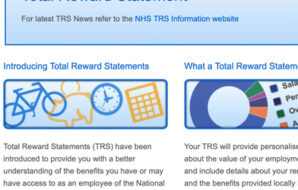
Understanding your Total Reward Statement (TRS)
You have probably heard about your NHS Total Reward Statement (TRS), but are you unsure what it actually represents? You…

Latest annual allowance update for the 2022/23 tax year
As mentioned in previous articles, the NHS is not providing annual allowance data for the 2022/23 tax year. At the…

NHS pension scheme partial retirement – are you eligible?
As discussed in a previous article the NHS pension scheme is changing their partial retirement options available. As always with…

NHS pension scheme pays deadline is looming – act now!
Before our minds focus on enjoying the summer, there is an important NHS pension deadline fast approaching, a deadline many…

Is it time to opt back into the NHS pension scheme?
The March 2023 budget turned out to be quite a momentous one for doctors and dentists who are members of…

Good news for doctors and dentists NHS pensions
A lot of this year’s budget news managed to find its way into the mainstream media before its announcements, so…

NHS Death in Service benefits – all you need to know
Nobody likes to think about what will happen if they pass away. Bringing up the subject of your death and…

The drama continues with the NHS pension scheme
If the NHS pension scheme was a fictional organisation in a TV drama, I am sure the current plot with…

NHS pensions: Informed decisions are better decisions
For many doctors and dentists navigating the NHS pension scheme (NHSPS) can seem like a bridge too far on top…

NHS pension scheme:Flexible retirement rules to change in April 2023
As of April 2023, it is proposed that members of the 1995 and 2008 sections of the NHS pension scheme…

Update on NHS pension rule changes: Annual allowance inflation revaluation
Finally, we have some good news about your NHS pension scheme and annual allowance, as the government is expected to…


You’ve received an HMRC annual allowance statement – what do you do now?
We all dread receiving the brown envelope with an HMRC logo, no more so than our higher earning NHS doctors…

Who will be paying for the McCloud Remedy? It could be you…
Most NHS pension scheme members are aware of the McCloud Remedy and the government’s decision to remove age discrimination to…

Changes in NHS pension contributions: are you a winner or loser?
The Department of Health and Social Care (DHSC) has just published its response to a recent consultation on NHS member…

Could not contributing potentially be better for your pension?
Once more we find ourselves in unusual times, and this time we are not talking covid – I refer to…

NHS pension scheme annual allowance statement errors identified
The NHS has confirmed over 2800 NHS pension scheme statements have been identified as having errors. The error affects statements…

3 ways your NHS pension is affected by the McCloud Remedy
As the details of the McCloud Remedy continue to unfold, we analyse the effects the government reforms have on your…


Why NHS pension enhanced and fixed protection will be lost
Any active members of the 1995/2008 NHS Pension Scheme (as of 31 March 2022) will automatically move into the 2015…

Annual allowance compensation deadline approaching
On 31 March 2022, the 2019/2020 annual allowance tax-liability compensation initiative closes. Please read this in conjunction with our more…

How an NHS car lease may impact your pension
At first glance, a car lease through NHS Fleet Services can look like an attractive offer. As an NHS professional,…

Retiring early? How this decision affects your NHS pension
What age is classed as early retirement? Once upon a time, there was only one NHS pension scheme and this…


Has the NHS pension scheme finally equalised death benefits?
It seems unbelievable that in the past not all partners or ‘significant others’ were viewed equally by the NHS pension…


Is the NHS Pension Scheme still good value for money?
You’d be forgiven for wondering if your NHS pension scheme is still good value for money. With tiered contributions as…

Is your pension pot smaller than your colleagues or partner?
If you just answered yes to that question, chances are you are female. There are many great aspects about a…

Who gets your NHS pension benefits when you die?
Most NHS pension scheme members focus on the retirement fund that comes with their pension. But did you know that…
3 big NHS pension scheme changes you need to know
Keeping up to date with NHS pension scheme changes can be challenging and tedious at the best of times, let…

Why knowing your NHS pension section matters
Knowing which section of your NHS pension scheme you are a member of is important; 1995, 2008 or the 2015…


Are you eligible for the NHS pension annual allowance charge compensation?
Do the words “threshold income”, “adjusted income”, “tapered allowance” & “scheme pays” sound familiar? For those clinicians who recognise this…

How to reduce your NHS pension retirement age
In today’s world many doctors and dentists are working extremely long hours, often under very stressful circumstances so it comes…

Is the NHS pension scheme too generous?
Who would have thought an NHS pension scheme could be too generous? When transferring your 1995 NHS pension scheme to…

Stop and think before you leave the NHS Pension Scheme
NHS staff are leaving the NHS Pension Scheme at almost 5 times the rate of other public sector workers¹. Are…

Are NHS medics being penalised for working part-time?
What doctor or dentist doesn’t find the better, more varied work/life balance of part-time working enticing? Of course one of…


How to know if you’re facing an unexpected tax bill?
Like many doctors and dentists, you may have already started to think about your next tax return, but have you…

Clinical Excellence Awards changes, your pay and pension
The warnings that changes to Clinical Excellence Awards (CEAs) were afoot have come true. A new local Clinical Excellence Award…

The powerful pension options medics now have
How doctors and dentists view and use their pensions has changed since ‘Pension Freedoms’ came into being in March 2015….

GP locums: Will you get your death in service benefit?
Locums are becoming a vital part of increasingly pressurised general practices, yet the NHS benefits they’re entitled to are not…

3 reasons to have a pension pot over the allowed limit
From the 6th April 2018, doctors and dentists who have more than £1,030,000¹ in their pension pot are very likely…

Who gets paid more: a doctor or a dentist?
From a purely monetary perspective, have you ever thought “would I have been better off training as a doctor or…
An important NHS Pension deadline looms
The deadline to elect for NHS Pensions’ Scheme Pays is only a few weeks away. If you miss it, you…
NHS Pension Scheme starts charging for information!
With the recent changes to both the lifetime and annual pension allowances, it’s imperative that medics of all ages get…

Is this a crystal ball for your NHS Pension?
Whilst the Budget 2016 didn’t rock the pensions’ world with any new announcements, there are already enough significant changes coming…

How much is ‘enough’ to stop working?
Apparently we’re living longer but not necessarily enjoying good health in old age. Pension schemes, including the NHS Pension Scheme,…
2015 NHS Pension: 5 details you need to know
On the 1st April 2015, 75%* of existing NHS employees and all new NHS Pension members will join the new…
Will your NHS Pension income be enough to live on in retirement?
Over the last few years, the NHS has been working through major changes to the NHS Pension Scheme. The Government has also implemented some of the biggest reforms to pensions in decades.
As a result, key considerations for doctors and dentists in the NHS Pension Scheme include:
- How does the new reduced annual and lifetime allowance affect you?
- How can you leverage the new pension legislation in your financial plans?
- Is retiring at age 60 a pipe dream or reality for doctors and dentists?
- Is the NHS Pension Scheme still good value?
Medics who joined the NHS Pension Scheme after 1 April 2008 will have different benefits and a different age at which normal retirement can be taken to those who joined the scheme before this date.
 How we can help you
With our extensive experience in dealing with the NHS Pension Scheme, your L&M financial adviser can provide you with a comprehensive review of your NHS pension which will include:
- A projection of your benefits incorporating factors specific to doctors and dentists that change the impact of the forecast;
- Ensuring that your service history is correct – a critical factor as the pension is, at present, invariably based on your length of service;
- Strategies to increase your pension provision either within the NHS or outside, or a combination of the two;
- Strategies should you wish to take early retirement, increase your tax free lump sum or make additional voluntary contributions to your NHS pension.
Get in touch to find out more